
Underfloor Heating FAQs: Expert Answers to Common Questions
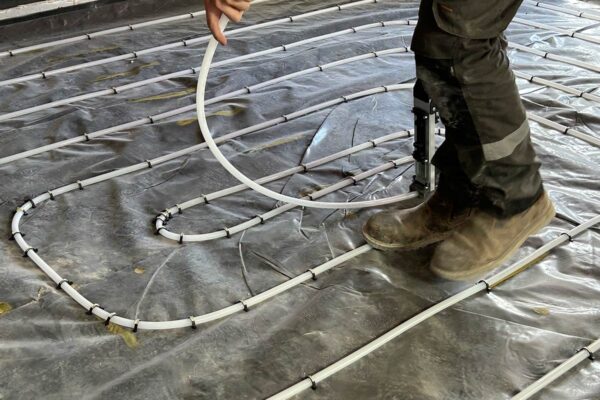
Underfloor heating is increasingly specified in both new-build and renovation projects, yet many homeowners, developers and specifiers have practical questions about how it works, how much it costs and whether it is suitable.
This guide answers the most common underfloor heating questions based on our real-world expert experience, covering both electric and wet underfloor heating systems.
Costs and efficiency
Is underfloor heating cheaper to run than radiators?
Underfloor heating can be cheaper to run than radiators because it operates at lower flow temperatures while delivering the same level of comfort. However, actual running costs can depend on insulation levels, heat source, system design and the way controls are used.
Does underfloor heating use a lot of electricity?
It depends on a number of factors, including room size, insulation and usage.
If used as the primary heat source, electric underfloor heating generally uses more electricity than wet underfloor heating systems. However, it is typically installed in smaller areas such as bathrooms where it is used less, so is more efficient. Plus, it is more efficient than other forms of electric heating.
Is underfloor heating efficient with heat pumps?
Yes, underfloor heating works particularly well with air-source and ground-source heat pumps because both operate at lower flow temperatures. This combination allows the heat pump to run more efficiently than when paired with traditional radiators which require higher temperatures to work effectively.
Installation and retrofitting
Can underfloor heating be installed in an existing home?
Underfloor heating can be and often is installed in existing homes. However, the method of installation in existing homes depends on floor construction and build-up height.
Low-profile wet systems or electric heating mats are commonly used in retrofit projects where minimal floor build-up is required and less disruptive work is preferable.
Does installing underfloor heating require digging up floors?
Sometimes. However, for most retrofit projects, low-profile systems are designed to be installed over existing subfloors with minimal disruption.
In some cases, particularly where insulation needs upgrading or underfloor heating is installed as part of a wider renovation, floor finishes may need to be removed and replaced.
How long does underfloor heating take to install?
Installation time varies depending on system type and project size.
Electric systems are typically quicker to install, particularly heating mats. Wet systems may take longer and are usually installed alongside other building works.
Floor Finishes and Compatibility
Which floor finishes work best with underfloor heating?
Tile and stone work particularly well with underfloor heating due to their thermal conductivity and stability.
Wood (particularly engineered wood), vinyl and even carpet can also be used. For carpets, the combined rating of the carpet and underlay should not exceed 2.5 tog.
Our guide to which flooring is most suitable for underfloor heating provides further information.
Is underfloor heating suitable for timber floors?
Yes, underfloor heating is suitable for timber floors. The only caveat is that temperature limits and expansion allowances must be carefully managed.
Engineered timber is generally preferred over solid wood as its layers provide strength and stability, allowing it to cope better with temperature changes.
Electric vs Wet Underfloor Heating
What is the difference between electric and wet underfloor heating?
Electric underfloor heating uses heating elements powered by electricity, whilst wet systems circulate warm water through a network of pipes connected to a heat source.
Electric systems are typically used for smaller areas like bathrooms, whereas wet systems are better suited to larger rooms, like living rooms.
Which underfloor heating system is best for a whole house?
Wet underfloor heating is generally the best option for whole-house heating due to lower running costs and compatibility with heat pumps and boilers.
Electric systems are usually reserved for individual rooms or retrofit projects, but can be suitable for whole-house heating depending on the project.
Maintenance and Lifespan
Does underfloor heating require maintenance?
Electric underfloor heating requires very little maintenance once installed.
Wet systems may require occasional checks of pumps, valves and manifolds as part of general heating system maintenance.
Manufacturers’ guidelines should provide maintenance guidance tailored to the system.
How long does underfloor heating last?
Underfloor heating systems are designed to last several decades.
As the systems are installed beneath the floor and are therefore protected, wear is minimal.
Controls and Zoning
Can underfloor heating be zoned?
Underfloor heating can be zoned so different rooms or areas are controlled independently.
This allows users to heat only the spaces in use, improving comfort and energy efficiency and lowering running costs.
Does underfloor heating work with smart thermostats?
Yes, most underfloor heating systems are compatible with the range of smart thermostats and control platforms on the market.
Correct thermostat selection and optimised programming are essential to ensuring accurate temperature control and efficient operation.
Does underfloor heating heat a room evenly?
Yes, underfloor heating provides better, more even heat distribution than traditional radiators by warming the floor area across the entire room. This reduces cold spots and creates a more consistent temperature.
Everything you need for an underfloor heating installation from Amber
Here at Amber Underfloor Heating, we supply an extensive range of wet and electric underfloor heating systems to retail customers – providing everything trade installers need to deliver high-performing underfloor heating systems.
We also offer all customers a free design service, access to our technical team and further additional services and support, so you can rest assured that you get the right underfloor heating system for your project.
Find out more about all the benefits of being an Amber reseller here.
Discover your nearest Amber stockists here.
Related Articles

Everything you need to know about the AmberMat
When it comes to underfloor heating, efficiency, reliability and simplicity are essential. The AmberMat, one of our electric underfloor...

Unlocking the benefits of zoned underfloor heating
As the prospect of even colder weather looms, homeowners and businesses alike are turning up the heating – and...

